

When you’re interviewing for a new role, it’s easy to become laser-focused on one thing: getting the offer. You carefully answer questions, highlight your achievements, and try to convince the hiring team that you’re the right person for the job. In that process, many candidates forget that they’re evaluating the company, too.
Sure, a recruiter can tell you the workplace is collaborative, the careers page can promise unlimited growth, and the company website can proudly display words like innovation and people-first culture. But every company says that. If corporate websites were completely accurate reflections of reality, every office would be a magical place where everyone is happy, meetings are productive, and nobody schedules a call five minutes before lunch.
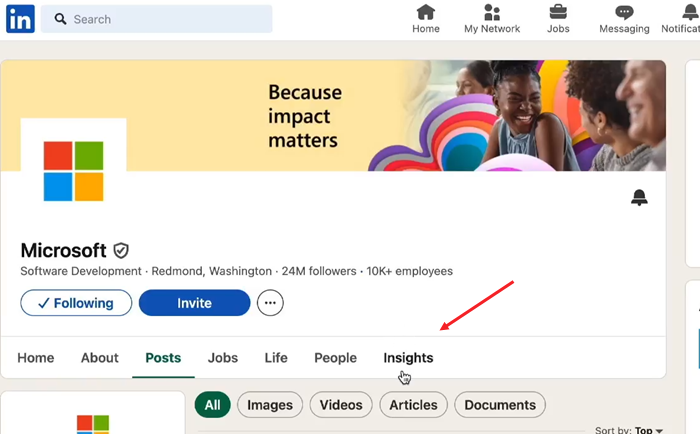
The good news is that you don’t have to rely entirely on marketing language. One of the most useful places to investigate a company’s culture is its LinkedIn page, specifically the Insights tab. Available with LinkedIn Premium, this section can provide valuable clues about what it’s actually like to work there.
How to uncover a company’s culture through LinkedIn Insights
The Insights tab gives you access to workforce data that can help you look beyond polished recruiting messages. While it won’t tell you everything, it can help you spot patterns that reveal how a company operates.
1] Look at employee distribution
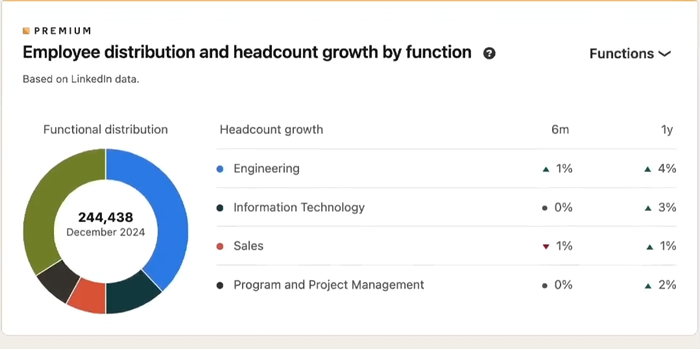
Start by examining where the company is growing. The Employee Distribution section shows how employees are spread across different functions and how those numbers are changing over time. For example, rapid hiring in Sales or Marketing may suggest a company focused heavily on revenue growth and customer acquisition. On the other hand, significant growth in Engineering, Product, or Research teams often signals a company investing in product development and long-term innovation.
Neither approach is inherently better. The goal is to understand what the organization prioritizes and whether those priorities align with the type of environment you want to work in.
2] Check tenure and hiring trends
Next, pay attention to employee tenure and hiring activity. A company with a healthy median tenure often indicates stability and an environment where people choose to stay. If employees remain for several years, it’s usually a sign that the organization is doing something right.
By contrast, a pattern of rapid hiring combined with equally rapid departures may warrant a closer look. High turnover doesn’t automatically mean there’s a problem. Some industries naturally experience more movement than others, but it can sometimes point to issues such as burnout, unrealistic expectations, or organizational instability.
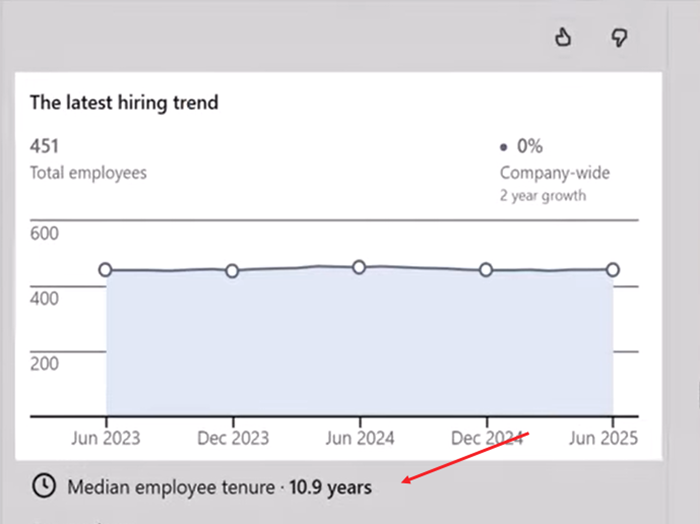
Think of tenure trends as the workplace equivalent of checking reviews before booking a hotel. One complaint may not mean much. A recurring pattern is worth noticing.
3] Follow the alumni trail
One of the most overlooked features is Notable Company Alumni. This section shows where former employees have gone after leaving the company. The information can be surprisingly revealing. If alumni frequently move into senior leadership, executive, or highly specialized roles at other organizations, it may indicate that the company invests in developing talent and preparing employees for bigger opportunities.
A strong alumni network often suggests that people leave with valuable skills, experience, and professional credibility rather than simply looking for an escape route.
Don’t stop at the Insights tab
Numbers tell part of the story, but culture is also reflected in how a company presents itself publicly. After reviewing the Insights data, visit the company’s Posts tab. Pay attention to what they celebrate. Are employee achievements regularly recognized? Do they highlight promotions, learning opportunities, volunteer initiatives, or team accomplishments? Or is every post focused exclusively on products, sales milestones, and corporate announcements. Neither approach is necessarily good or bad, but together with the Insights data, these posts can help paint a more complete picture of what the organization values.
A smarter way to research your next employer
No single metric can perfectly predict your future workplace experience. Conversations with recruiters, interviews with hiring managers, employee reviews, and your own instincts all matter. Still, LinkedIn’s Insights tab gives job seekers access to information that goes beyond carefully crafted corporate messaging. By examining employee distribution, tenure trends, hiring patterns, and alumni outcomes, you can gain a clearer understanding of the culture behind the company logo. Before you accept your next offer, spend a few minutes investigating the company the same way they’re investigating you. It might be the most important interview preparation you do except this time, you’re the one asking the questions.